

H2LooP is a deep tech lab that builds AI from scratch for embedded and hardware engineers. Every team there formatted its documents their own way. I codified a brand layer underneath their tools, so anyone who makes a document gets on-brand output by default without knowing the layer exists. The guidelines now follow people, so that people needn’t follow the guidelines.
Important decks consumed 3-4 designer hours, while everything else went out on generic Claude templates.
Writing one production language for every format
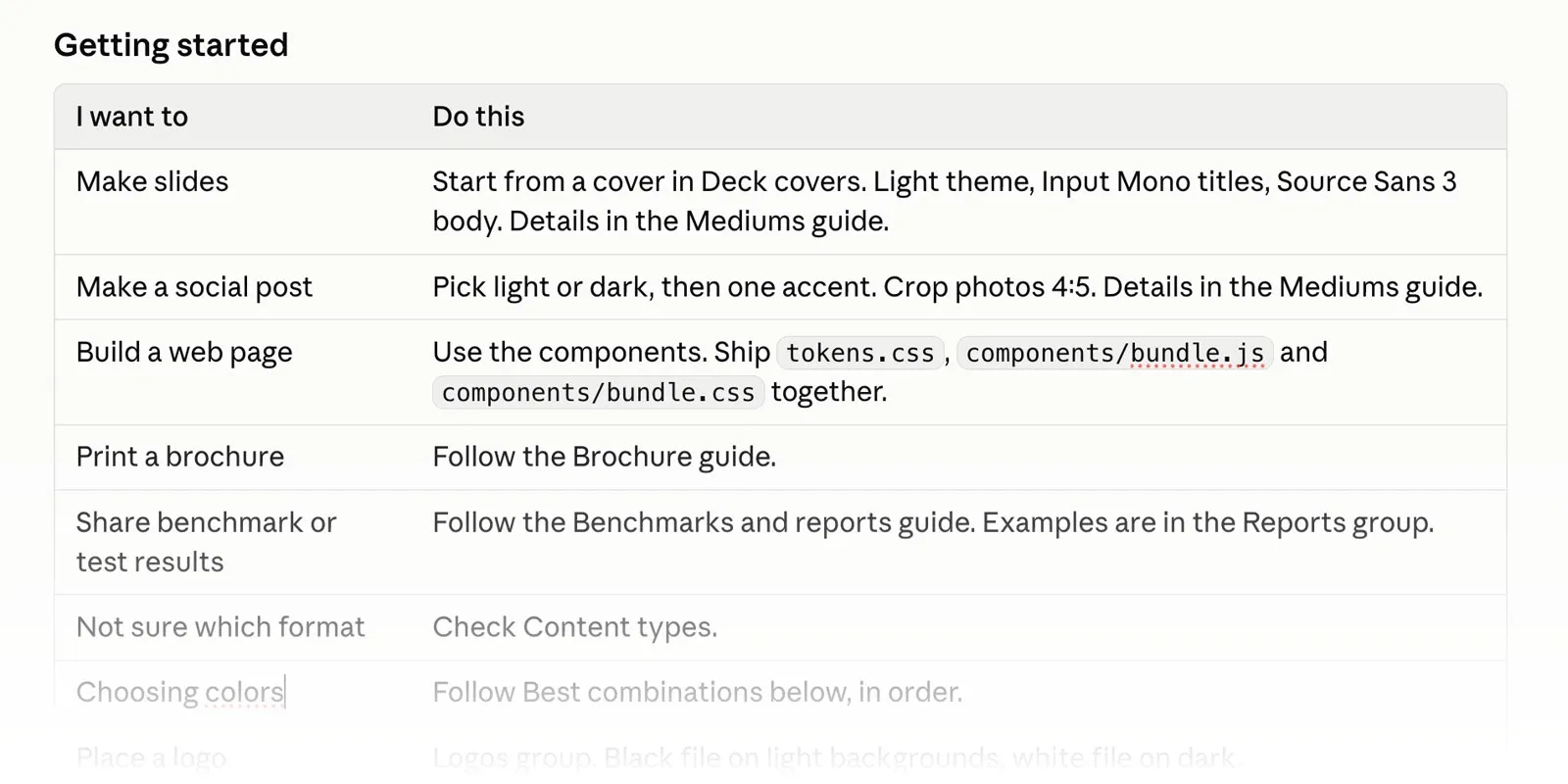
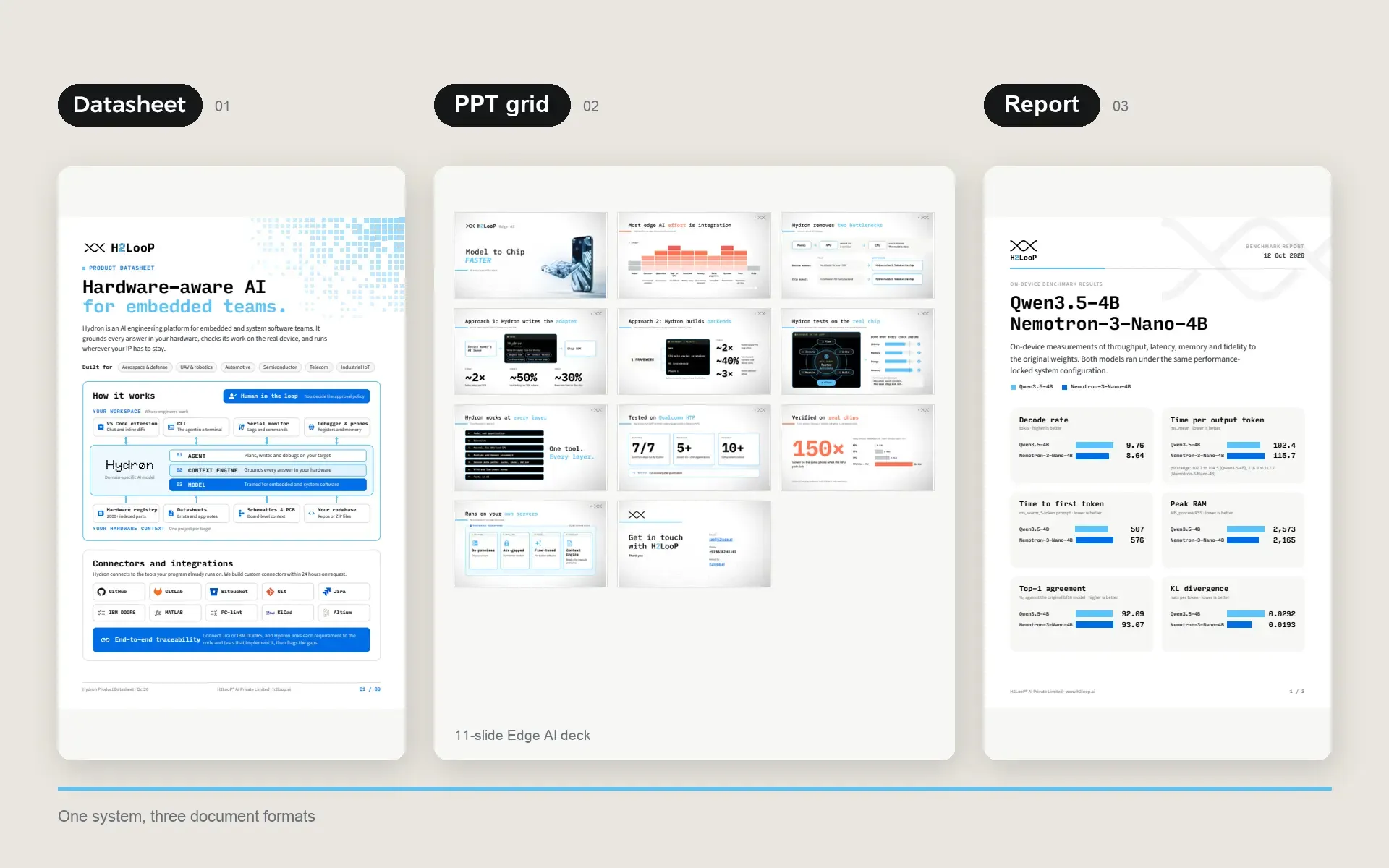
The system covers all of H2LooP’s formats, from sales decks and brochures to benchmark reports and website UI. Fonts, colours and layouts all resolve from one database containing token files and named values and guidelines for the whole system.
Holding every document to the same bar
Nobody looks up a hex code or asks for the logo before sending a document out. Everything is already made on brand before needing to think twice. Sales can focus on messaging, engineers focus on data accuracy and founders don’t rely on a designer spending another 2 hours.
AI agents are instructed to read the system directly instead of expecting briefs for every document. They use existing build scripts cutting down on AI usage cost for every request.
The rules depend on content type so a table only takes formatting guideline in research documentation, but turns boring tables into visuals that readers can scan on decks and blogs.
Turning brand rules into code
build.py generates the code that styles web pages (CSS and Tailwind) from tokens.json. A second script brings any Google Slides export back on brand with the right fonts, type scale and icons.
Automated checks measure text overflow with real font metrics. They also flag any agent skill, a reusable instruction set an AI agent follows, that drifts from the shared rules.
The product manager and nearby engineers adopted it first and reported issues. An admin then shared the system across the organisation on Claude, so generic generations follow the brand without extra steps.
Making the brand infrastructure
The brand now behaves like infrastructure, because it appears in every output while nobody notices it. Any tool or agent H2LooP adopts next can read the same layer on its first day.
Someone who urgently needs to put together a deck can now open and reuse a colleague’s deck or report without ever having to manually update headers, page number formats or any inconsistency. Design is solved using AI.